

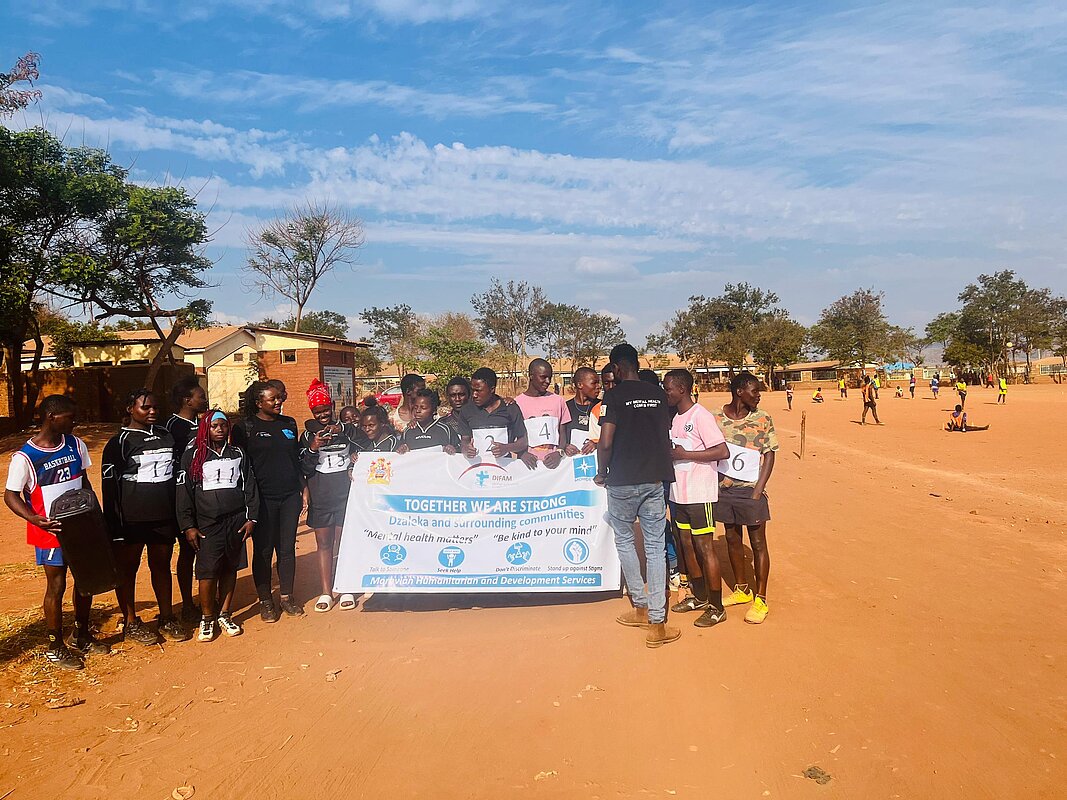
Bringing Hope to the Dzaleka Refugee Camp
More than 50,000 people live in the Dzaleka refugee camp in Malawi – having fled from war, persecution, and poverty. Originally designed for just 10,000 people, the camp is severely overcrowded. Harsh living conditions also prevail in the surrounding communities. Many of the more than 100,000 people in the region suffer from the psychological consequences of their experiences: depression, anxiety disorders, trauma, or addiction are part of everyday life – often left untreated and stigmatized.
DIFÄM is taking action – right where it’s needed most.
Together with a local partner organization and with support from the German Federal Ministry for Economic Cooperation and Development (BMZ), we are promoting mental health in the camp and in the surrounding communities.
Making help visible – reducing stigma
Our approach is holistic: We provide direct psychological and medical care while also focusing on education and awareness. The goal is to bring mental illness out of the shadows and to build long-term structures for sustainable mental health care.
In collaboration with local professionals, traditional healers, and volunteer community workers, we train healthcare staff to identify and treat mental illnesses. In this way, local support centers are established – right in the heart of the community. So that mental health conditions can be recognized and treated more quickly and effectively.
Raising Awareness Through Creative Channels
To break the taboo around mental health, we rely on powerful public outreach:
- Information campaigns on topics such as depression, suicide prevention, addiction, and conflict resolution
- Theater performances and radio programs broadcast on the camp’s own station
- Social media engagement by the youth group Dzaleka Rising
These channels are especially effective in reaching young people and help create an open environment where mental health challenges can be openly discussed.
Self-Help Groups – Spaces for Healing and Exchange
In small self-help groups, those affected and their families find a safe space to share their experiences, find new hope, and develop coping strategies together. The groups are organized by age, gender, and specific issues – for example, depression, trauma, or addiction.
What began with professional guidance is now increasingly led independently by trained community members – a key step toward long-term impact.
Early Successes Bring Hope
More than 300 people are already participating in the self-help groups – with noticeable results: Many report that, for the first time, they feel understood, have gained new perspectives, and have even become sources of hope for others. Healthcare workers also feel more confident and empowered in dealing with mental health issues thanks to targeted training.
Long-Term. Effective. Sustainable.
Our goal: a comprehensive, culturally sensitive mental health care system – that continues beyond the duration of the project. That’s why we are strengthening local capacities, training “expert clients,” and continually deepening our educational efforts.
This project clearly demonstrates: Mental health is not a side issue – it is the key to a life of dignity in the midst of crisis.


